
Modern homeownership involves navigating an increasingly complex web of household operating expenses. Utility bills—encompassing electricity, natural gas, heating fuel, and municipal water—rarely decline over extended periods. In many households, abrupt spikes in monthly utility bills are dismissed as unavoidable seasonal penalties brought on by severe summer heatwaves or bitter winter freezes. In reality, unexpected surges in utility expenditures stem primarily from compounding mechanical inefficiencies, unnoticed envelope breaches, and degraded thermal barriers throughout the structure. Viewing a residential property as a unified ecosystem rather than an assortment of isolated appliances is the foundational step toward achieving lasting financial efficiency and predictable operating budgets.
When mechanical systems work against degraded physical structures, energy is wasted at every stage of distribution. A furnace straining against leaking attic bypasses, an air conditioning unit battling radiant solar heat through untreated glass, or a water heater struggling through heavy calcium sediment draws excessive fuel and current just to deliver baseline comfort. By systematically evaluating every building zone—from the roofline down to the foundation slab and electrical panel—homeowners can replace expensive emergency repairs with a proactive strategy. Lowering utility costs does not require sacrificing personal comfort; it demands that every unit of energy and gallon of water entering the home delivers maximum functional benefit with minimal waste.
Eliminate Drafts and Control Solar Heat Penetration

Windows, doors, and building envelope apertures represent the primary pathways for uncontrolled thermal transfer in modern residences. During summer months, untreated glass permits shortwave solar radiation to flood interior living spaces, creating a greenhouse effect that drives indoor temperatures up and forces cooling systems into continuous operational cycles. In winter, the dynamic reverses: conditioned heat radiates outward through cold glass, while microscopic structural gaps allow cold exterior drafts to penetrate interior living zones.
Conducting a physical inspection is the first step toward reclaiming envelope control. Homeowners can pinpoint subtle perimeter drafts by passing a lit incense stick or an infrared thermometer along window frames, trim joints, sliding tracks, and exterior door thresholds on a windy day. Any visible deflection in smoke trails or sudden dips in surface temperature reveal locations where conditioned air escapes directly into the outside environment.
Addressing window-related thermal loss requires pairing interior solar management with physical envelope remediation:
- Outfitting vulnerable windows with cellular honeycomb shades, insulated solar screens, or professional custom blind services establishes an insulating dead-air buffer that blunts radiant heat exchange. High-performance cellular coverings featuring integrated side tracks can reduce seasonal solar heat gain through sunny exposures by up to 60 percent, while curbing nighttime winter heat loss by up to 40 percent.
- Inspecting multi-pane glazing assemblies for interior condensation, etched glass fogging, or compromised peripheral seals reveals whether perimeter caulking is sufficient or if commissioning a full window replacement service is necessary to restore thermal integrity. Upgrading to modern vinyl, fiberglass, or clad frames equipped with low-emissivity coatings and argon gas fills dramatically improves overall window thermal resistance compared to aging single-pane units.
- Applying high-performance polyurethane or elastomeric caulking around exterior window trims seals settling cracks and prevents wind-driven moisture from rotting rough frame openings.
- Installing magnetic interior storm window panels or high-clarity shrink films across drafty auxiliary windows offers an immediate, cost-effective stopgap that stops convective drafts during severe cold snaps.
Calibrate Airflow Dynamics and Seasonal Cycle Performance

Space conditioning represents the single largest consumer of residential energy, routinely commanding over fifty percent of total monthly utility expenditures. When central heating or cooling machinery operates under mechanical strain, restricted airflow, or improper refrigerant charges, utility costs escalate rapidly even as the home experiences hot spots, drafts, and humidity. Neglected system hygiene and lack of seasonal calibration force motors and compressors to run significantly longer to satisfy thermostat setpoints.
In forced-air heating setups, restricted return airflow starves the heat exchanger, triggering elevated internal temperatures that can trip safety switches and cause component breakdown. Burner assemblies with clogged orifices or misaligned flame sensors suffer from incomplete combustion, wasting fuel and producing soot that insulates heat exchange surfaces. Recognizing early indicators of equipment distress—such as irregular cycling cadences, delayed ignition, or metallic rattling—gives homeowners time to arrange an expert heating repair before mid-winter freezes cause complete operational failure.
Cooling equipment faces parallel thermal stresses during extreme summer peaks. Exterior condensing units must reject enormous quantities of heat into sweltering outdoor air. When outdoor coil fins become clogged with dust, lawn clippings, or foliage, head pressures inside the compressor surge, leading to excessive power draws and compromised heat transfer:
- Replacing air handler filters every 60 to 90 days prevents restrictive dust mats from creating high static pressure across the blower motor. Selecting filters with appropriate ratings guarantees optimal particle capture without choking airflow.
- Maintaining a clear two-foot clearance zone around the exterior condenser unit promotes unobstructed heat rejection. Homeowners should gently rinse exterior coils with a garden hose spray once every spring to dislodge dirt without bending delicate aluminum fins.
- Monitoring refrigerant circuit behavior for unusual symptoms—such as iced-over suction lines, hissing sounds near expansion valves, or lukewarm discharge air—allows homeowners to schedule targeted air conditioner repairs before compressor burnout ruins the system.
- Upgrading to an adaptive smart thermostat allows for programmable eight-hour temperature setbacks of seven to ten degrees during sleep or work hours, cutting annual heating and cooling bills by up to ten percent without sacrificing comfort.
Protect Attic Insulation and Mitigate Foundation Runoff
The overhead roof structure and attic volume serve as a home’s primary line of defense against weather extremes and radiant solar heating. Thermal efficiency within the attic depends on an equilibrium between uniform insulation coverage and continuous passive ventilation. During summer peaks, solar radiation absorbed by dark roofing materials can drive unconditioned attic temperatures past 140 degrees Fahrenheit. If attic floor insulation is thin or improperly sealed, this massive heat reservoir conducts downward through ceiling drywall, placing an overwhelming cooling load on mechanical equipment.
In cold weather, poor attic ventilation and inadequate insulation depth combine to create damaging ice dams. Interior warmth leaking into the attic melts snow off the upper roof deck; the runoff travels downward until it hits cold roof eaves, refreezing into ice barriers that force standing water underneath shingles and into exterior wall cavities. Executing scheduled, routine roof maintenance ensures that chimney flashings are watertight, damaged shingles are secured, and soffit ventilation intake baffles remain clear of blown insulation, preserving continuous airflow from eaves to ridge vents:
- Inspecting attic insulation levels guarantees that thermal resistance meets modern standards, typically an R-value between R-38 and R-60 depending on your climate zone. Blown-in cellulose or fiberglass batts that have become matted or compressed must be replenished to re-establish air pockets.
- Sealing hidden attic bypasses around plumbing vent pipes, electrical ceiling boxes, and recessed lighting cans with fire-resistant spray foam stops the stack effect from vacuuming conditioned air up into the unconditioned attic.
- Inspecting roof drainage troughs for severe pitch failure, joint oxidation, or persistent sagging helps determine whether minor repairs are adequate or whether a comprehensive gutter replacement is necessary to protect fascia boards and wall framing from water saturation. Seamless aluminum troughs eliminate leaky joints and direct downpours safely away from thermal boundaries.
- Fitting downspouts with rigid splash extensions that deposit discharge water at least six feet beyond basement foundation walls keeps perimeter soils dry, decreasing basement humidity levels and relieving the electrical burden on sump pumps and dehumidifiers.
Eliminate Invisible Fluid Losses and Restore Line Pressure

Domestic water heating and municipal water delivery represent a continuous drain on residential budgets. Domestic water heaters rank as the second-largest utility expense in most households, responsible for approximately 18 percent of annual utility bills. Unlike heating or cooling equipment that cycles off according to weather patterns, conventional storage water heaters maintain 40 to 50 gallons of water at high temperatures constantly. Every plumbing leak, dripping hot-water faucet, or slowly siphoning toilet tank forces the water heater to run supplementary reheating cycles, compounding water consumption costs with unnecessary fuel charges.
Unresolved water leaks can quietly waste tens of thousands of gallons of treated water annually. A leaking toilet flapper valve can silently pass up to 200 gallons of water per day straight into the sewer line without making a noticeable sound. Taking prompt action on necessary plumbing repairs—such as rebuilding corroded valve seats, replacing leaking supply flex lines, installing modern pressure-reducing valves, and replacing decayed toilet gaskets—halts utility waste at the source and prevents structural moisture damage.
Beyond visible driveline leaks, the interior condition of residential drainage lines exerts a surprising influence on utility efficiency. Slow drains and partially obstructed waste lines increase backpressure on dishwashers and washing machines, forcing them to cycle longer and consume additional pumping power:
- Flushing several gallons of water from the water heater bottom drain valve annually purges accumulated sediment. In electric heaters, sediment encases the lower heating element and causes premature element burnout, while in gas units, sediment forms an insulating crust that impedes heat transfer from the burner flame through the steel tank bottom.
- Installing closed-cell foam pipe insulation over the first six feet of water lines connected to the water heater lowers standby convection heat losses. This allows homeowners to reduce water heater temperature settings to 120 degrees Fahrenheit without sacrificing delivery temperature at distant fixtures.
- Booking a professional, mechanical snaking or hydro-jet drain cleaning service removes stubborn buildup, solidified fats, and mineral scale from central building sewer lines, eliminating wastewater flow resistance and preventing costly appliance drainage interruptions.
- Upgrading ancient sink aerators and shower heads to modern high-efficiency fixtures equipped with pressure-compensating flow regulators reduces overall domestic hot water consumption by up to 35 percent without sacrificing perceived spray velocity.
Cut Parasitic Standby Draws and Modernize Circuit Capacity
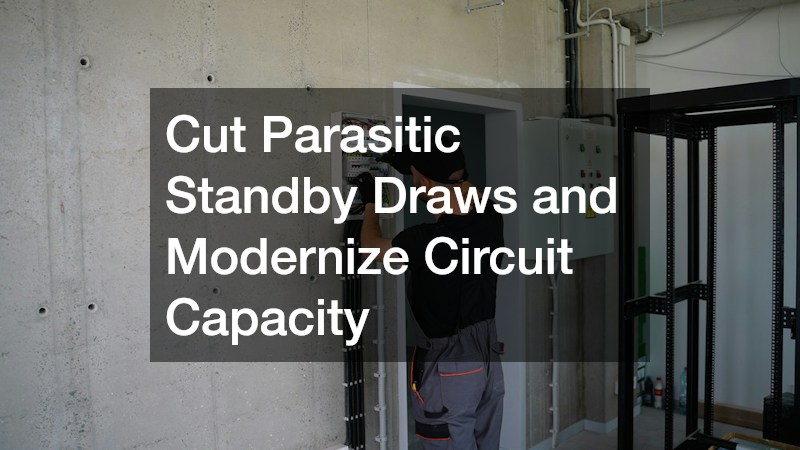
The average household contains dozens of interconnected consumer electronic devices, network infrastructure components, and digital conveniences. While these devices enhance daily living, they create a persistent baseline drain on the electric meter known as phantom load or vampire draw. Televisions, desktop computers, video game consoles, microwave clocks, and smart home hubs continuously pull current even when ostensibly powered off, consuming electricity around the clock to support standby network cards, status LEDs, and internal transformers. Standby power draw can account for up to ten percent of a home’s monthly electric bill.
Combating parasitic power demands requires automated energy management paired with clean, efficient electrical distribution. Outdated residential panels, loose screw terminals on circuit breakers, and undersized wiring can generate measurable electrical resistance. This resistance causes electrical energy to be wasted as dissipated heat within wall cavities before it ever reaches end-use appliances. Arranging comprehensive residential electrical services to evaluate distribution panel condition, re-torque branch terminals, and balance amperage loads across individual bus bars guarantees that utility power flows cleanly and efficiently throughout the residence:
- Plugging clusters of entertainment and home office electronics into intelligent smart power strips eliminates vampire drain automatically. These units detect when a primary device goes into sleep mode and instantly cut auxiliary power to associated peripherals like soundbars, subwoofers, and printers.
- Replacing legacy incandescent and compact fluorescent light bulbs with high-efficiency light-emitting diode (LED) fixtures slashes lighting electricity usage by 75 to 80 percent while eliminating the excess heat output that legacy bulbs shed into conditioned rooms during warm seasons.
- Consulting with licensed local electricians to conduct an infrared thermal panel scan and whole-home load audit identifies hidden circuit bottlenecks, high-resistance wire connections, and unbalanced single-phase loads that quietly run up meter measurements.
- Adding dedicated 240-volt circuits for modern, high-efficiency equipment—such as hybrid heat pump water heaters, ductless mini-split condensers, and induction cooktops—prepares the home to transition away from inefficient resistive heating elements to modern, low-draw alternatives.
Achieving exceptional residential efficiency and permanently shrinking utility bills is neither an overnight undertaking nor the result of a single expensive mechanical replacement. Instead, lasting household efficiency is built upon the accumulation of incremental improvements, routine preventative maintenance, and timely professional interventions across every major structural and mechanical zone. When a building envelope successfully repels solar heat gain and blocks convective drafts, heating and cooling equipment can maintain comfortable living conditions without laboring under severe physical strain. When roof drainage shields exterior wall cavities, plumbing lines flow without parasitic leaks or mineral scaling, and electrical panels distribute power without internal resistance, the entire residence operates in harmonious mechanical equilibrium.
To turn these technical practices into a practical household routine, divide maintenance actions into a balanced seasonal calendar. Dedicate the spring to inspecting cooling equipment, clearing condenser fins, and cleaning exterior drainage channels. Use early summer to deploy thermal window treatments and conduct plumbing audits. Focus autumn on heating system safety checks, attic ventilation assessments, and overhead weatherproofing. Finally, reserve winter for monitoring phantom electrical loads, identifying draft points, and inspecting insulation depth. Transforming home maintenance from a reactive scramble into an organized, proactive discipline protects your financial bottom line, elevates daily living comfort, and secures the enduring structural value of your property for decades to come.